What to Expect During an On-Site Aluminium Refinishing Project
- What happens during an aluminium refinishing project?
- Key Stages of an On-Site Aluminium Refinishing Project
- Case Study: Hamlins Hill Commercial Centre, Auckland
- How Long Does an On-Site Refinishing Project Take?
- Benefits of On-Site Aluminium Refinishing
- When Is Refinishing the Right Option?
- Final Thoughts
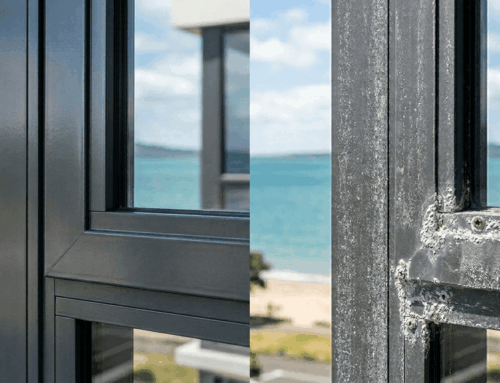
Aluminium joinery in Auckland are constantly exposed to UV, moisture, and coastal air, which over time leads to fading, chalking, and surface deterioration.
When this happens, on-site aluminium refinishing is often the most practical solution. Instead of removing or replacing windows and panels, surfaces can be restored in place – reducing disruption while extending their lifespan.
Understanding how the process works helps property owners, managers, and developers plan effectively and avoid unnecessary costs or delays.
What happens during an aluminium refinishing project?
An on-site aluminium refinishing project involves inspection, surface preparation, repairs, masking, spray application, and final inspection. It restores aluminium surfaces without removal or replacement while improving durability and appearance.
Key Stages of an On-Site Aluminium Refinishing Project
| Stage | What Happens | Why It Matters |
|---|---|---|
| Inspection | Assess coating condition, corrosion and exposure | Confirms whether refinishing is suitable |
| Preparation | Clean, abrade and treat affected areas | Ensures proper coating adhesion |
| Repairs | Fix damaged joinery and problem areas | Prevents further deterioration |
| Masking | Protect glazing and surrounding surfaces | Delivers a clean, controlled finish |
| Spray Application | Apply the refinishing system | Restores protection and appearance |
| Final Inspection | Check finish quality and complete touch-ups | Ensures long-term durability |
1. Initial Inspection and Assessment
Every project starts with a detailed inspection to evaluate the condition of the existing aluminium surfaces.
This includes identifying:
- coating breakdown
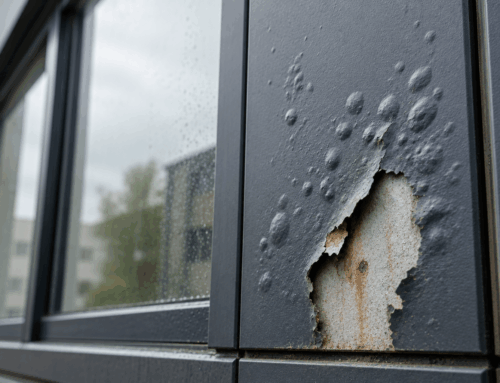
- oxidation or corrosion
- environmental exposure levels
- suitability for recoating
Even buildings not directly on the coast can be affected by salt-laden air and high UV, making early assessment critical.
2. Surface Preparation (The Most Important Step)
Preparation is the foundation of a successful refinishing project.
Before any coating is applied, surfaces must be properly cleaned and conditioned to ensure long-term performance.
Typical preparation includes:
- removing dirt, grease, and contaminants
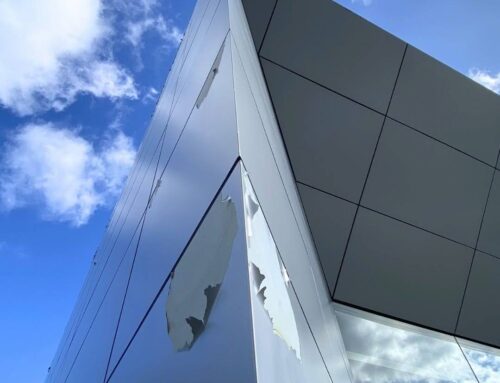
- eliminating degraded coating
- sanding or abrading the surface
- treating oxidation or corrosion
Without proper preparation, coatings are far more likely to fail prematurely.
3. Repairing Damaged Areas
Before refinishing begins, any underlying issues are addressed.
This may involve:
- repairing worn aluminium joinery
- treating corrosion-prone areas
Ensuring the surface is stable before coating is essential for durability.
4. Masking and Site Protection
Because refinishing is done on-site, protecting surrounding areas is a critical step.
This involves masking:
- glass and glazing
- seals and joints
- nearby surfaces and walkways
In occupied buildings, this ensures work is carried out safely and cleanly.
5. On-Site Spray Application
Once preparation is complete, the refinishing system is applied using professional spray equipment.
This process allows for:
- even coverage
- consistent finish
- restoration of both appearance and protection
On-site spray application is especially effective where removal or factory coating is not practical.
6. Managing a Live Building Environment
Most refinishing projects take place while buildings remain occupied.
To minimise disruption, contractors typically:
- stage work in sections
- coordinate access with tenants
- manage safety and movement around work areas
With proper planning, businesses and residents can continue operating throughout the project.
7. Final Inspection and Completion
Before completion, a full quality check is carried out to ensure:
- consistent coating finish
- all repairs are completed
- the site is clean and protected areas are removed
The result is a refreshed aluminium surface designed for long-term performance.
Case Study: Hamlins Hill Commercial Centre, Auckland
A recent aluminium Joinery refinishing project at a live commercial site in Penrose shows how this process works in practice.
WRNZ carried out detailed surface preparation, including oxidation and corrosion treatment, followed by full masking of glazing and surrounding elements. A high-performance refinishing system was then applied using controlled spray techniques across multiple tenancy units.
| Element | Details |
|---|---|
| Location | Penrose, Auckland |
| Site Type | Live commercial precinct |
| Work Type | Aluminium Joinery Refinishing |
| Key Preparation | Surface preparation, corrosion treatment and masking |
| Application | High-performance spray coating system |
| Challenges | Active tenants, restricted access and weather conditions |
| Outcome | Uniform finish, improved durability and minimal disruption |
The project required careful coordination to maintain safe access and minimise disruption, while still delivering a consistent, long-lasting finish.
How Long Does an On-Site Refinishing Project Take?
Timelines vary depending on:
- building size and scale
- access requirements
- surface condition
- weather conditions
Smaller projects may take a few days, while larger commercial sites can take several weeks, especially when work is staged.
Benefits of On-Site Aluminium Refinishing
On-site refinishing offers several advantages:
- no need to remove windows or panels
- minimal disruption to occupants
- faster turnaround than replacement
- extended lifespan of aluminium surfaces
- improved appearance and protection
When Is Refinishing the Right Option?
Refinishing is typically suitable when:
- aluminium is structurally sound
- deterioration is limited to the surface
- coatings are fading, chalking, or worn
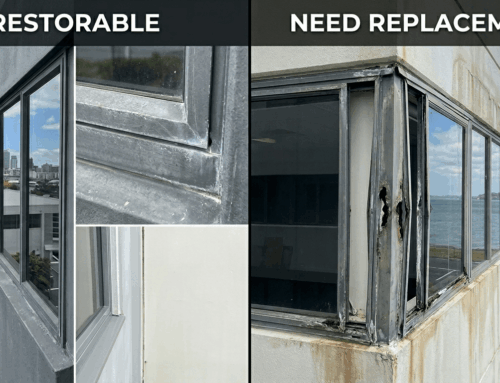
If corrosion is severe or structural damage is present, additional repairs or replacement may be required.
Final Thoughts
Aluminium surfaces in Auckland are exposed to demanding environmental conditions that accelerate wear over time.
On-site refinishing provides a practical way to restore protection, improve appearance, and extend the life of existing joinery – without the cost and disruption of replacement.
Understanding what to expect at each stage helps ensure smoother project delivery and better long-term results.