What Happens When Moisture Gets Behind a Facade Coating?
Your Content Goes Here
A facade coating does more than improve the appearance of a building. It also helps protect aluminium joinery, steel components and architectural panels from weathering, contamination and everyday exposure.
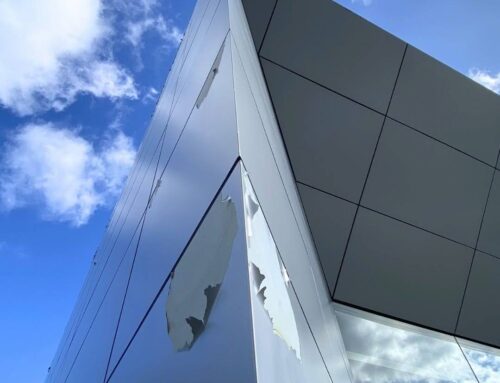
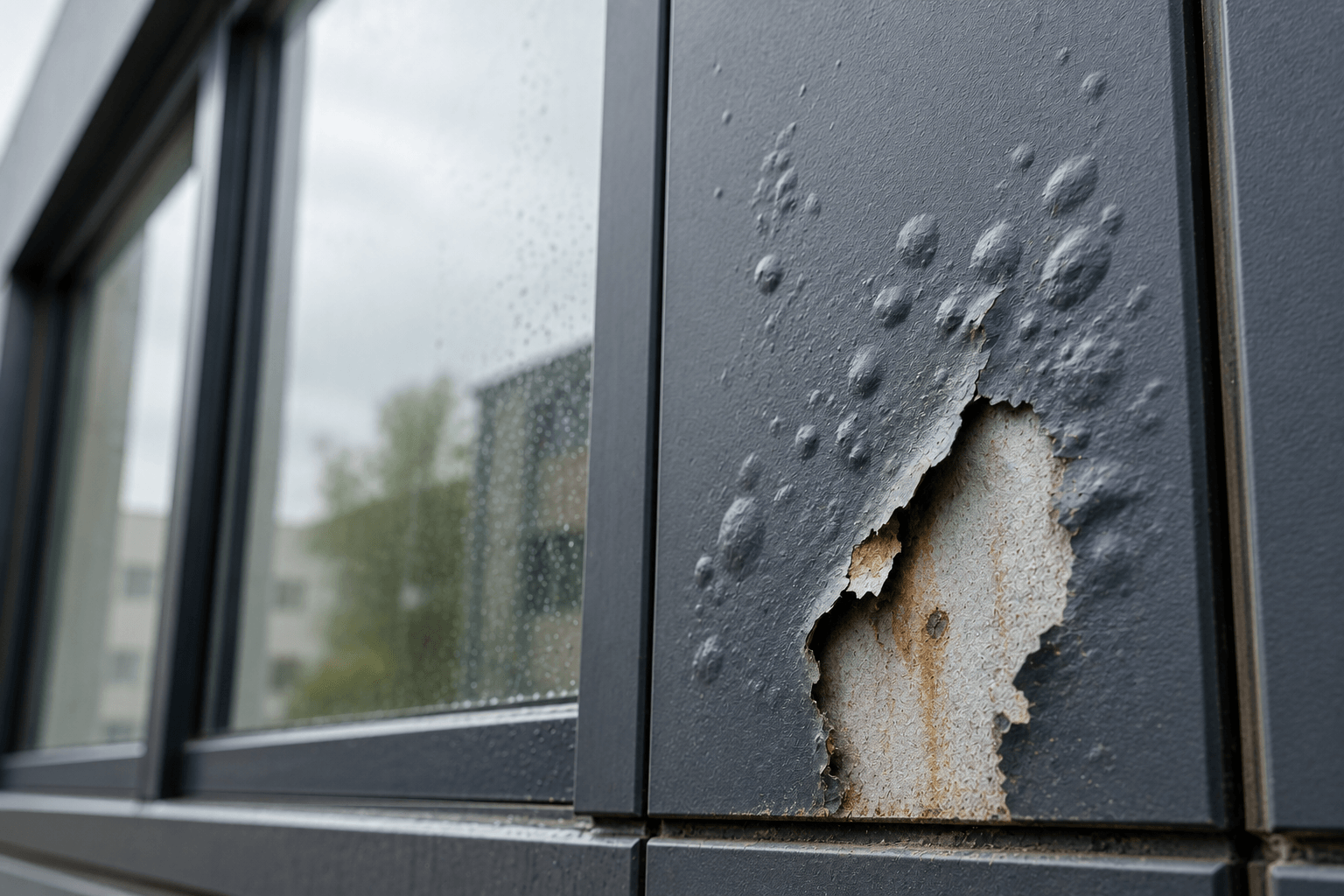
When moisture gets behind the coating, the surface can begin to deteriorate from the inside out. The first visible sign may be a small bubble, peeling edge or patch of discolouration. Beneath the surface, however, moisture may already be weakening adhesion or contributing to corrosion.
Identifying the cause early can make the difference between a localised repair and a much larger facade refurbishment project.
WRNZ repairs and refinishes architectural surfaces that were originally powder coated. The team prepares and restores these surfaces on site using professional wet-spray coating systems. WRNZ does not provide factory powder coating.
What Does Moisture Behind a Facade Coating Mean?
Moisture behind a facade coating means that water or water vapour has reached the space between the protective finish and the material underneath, known as the substrate.
The substrate may include:
- Aluminium window and door joinery
- Steel framing or facade components
- Aluminium composite material, including ACM or ACP
- Architectural facade panels
- Previously painted or powder-coated surfaces
A coating needs to remain firmly bonded to a clean, correctly prepared substrate. When water enters through a defect, damaged edge, failed seal or poorly prepared area, that bond may begin to weaken.
Repeated wet-and-dry cycles can then cause the coating to lift, blister, peel or separate from the surface.
How Does Moisture Get Behind a Facade Coating?
Water does not always enter through an obvious opening. Small defects that are difficult to see from ground level can be enough to allow moisture beneath the finish.
Common entry points include:
- Scratches, chips or impact damage
- Cracked or deteriorated coating
- Exposed panel edges
- Failed sealant around windows and joints
- Gaps around fixings, flashings and penetrations
- Previous repairs that were not sealed correctly
- Existing corrosion beneath the surface
- Areas where water collects because of poor drainage
- Insufficient cleaning or preparation during earlier coating work
Coastal buildings may face additional exposure to wind-driven rain and airborne salt. Salt contamination can hold moisture against the surface and accelerate deterioration when it reaches damaged or exposed metal.
The visible damage may also appear some distance from the original entry point. For that reason, repairing only the obvious blister may not solve the underlying cause.
Common Signs of Moisture-Related Coating Failure
| Visible symptom | What may be happening underneath | Recommended action |
| Bubbles or blisters | Moisture or pressure may be lifting the coating | Arrange an inspection before the area expands |
| Peeling or flaking | Adhesion between the coating and substrate may have failed | Remove unstable coating and inspect the substrate |
| White powder or deposits | Oxidation, salt or moisture contamination may be present | Clean, assess and treat the affected surface |
| Rust staining | A steel component may be corroding | Investigate the source and extent of corrosion promptly |
| Dark marks around joints | Water may be entering through failed sealant or panel details | Inspect joints, flashings and drainage points |
| Soft or loose coating | Moisture may be affecting the coating film or bond | Avoid covering it without proper preparation |
These symptoms do not always confirm the exact cause. Blistering, for example, may also result from contamination, poor preparation or unsuitable application conditions. A professional inspection helps determine what is happening beneath the visible finish.
What Happens Beneath the Surface?
Once moisture reaches the substrate, the coating may deteriorate through several stages.
1. Adhesion begins to weaken
The coating depends on a secure bond with the underlying material. Moisture can interfere with this bond, particularly where contamination, damage or corrosion is already present.
2. Blisters begin to form
Moisture and trapped contaminants can create pressure beneath the coating. As the pressure increases, the finish may lift and form visible bubbles.
3. The coating separates
A small blister may grow into a larger area of delamination. Delamination means the coating is no longer securely attached to the substrate.
4. Corrosion develops or accelerates
When exposed metal comes into contact with moisture and oxygen, corrosion can begin. Steel may develop rust, while aluminium may show white oxidation, staining or pitting.
5. The damaged area spreads
Once the coating edge has lifted, more moisture can enter. The failure may then spread beyond the original defect, especially when the surface repeatedly becomes wet and dries again.
Is Moisture Damage Only Cosmetic?
Not always.
A small blister or peeling edge may initially appear to be a visual problem, but coating failure can reduce the protection available to the material underneath.
Possible consequences include:
- Increasing areas of peeling or delamination
- Corrosion of metal substrates
- Surface pitting or material loss
- Staining around panels and windows
- Damage spreading beneath apparently sound coating
- More extensive preparation and repair work
- Replacement of components that may previously have been restorable
Moisture behind a coating does not automatically mean that a facade is structurally unsafe. However, the problem should be assessed before it becomes more widespread.
Why Painting Over the Damage Usually Fails
Applying a new layer of paint over a blistered or peeling area may hide the problem temporarily, but it does not restore the failed bond beneath the surface.
A durable repair normally requires:
- Removing loose and unstable coating
- Inspecting the exposed substrate
- Treating corrosion or contamination
- Identifying and correcting the moisture-entry point
- Preparing the surface correctly
- Applying a compatible wet-spray refinishing system
Painting directly over moisture damage can trap contamination beneath the new finish. The surface may look improved for a short period, but the same blistering or peeling can return.
How Moisture-Damaged Facade Coatings Are Assessed
A professional assessment generally follows several steps.
Step 1: Inspect the visible failure
The affected area is checked for blistering, peeling, staining, corrosion and loss of adhesion.
Step 2: Review surrounding joints and details
Sealants, panel edges, fixings, window perimeters, flashings and drainage paths may be examined to identify possible moisture entry.
Step 3: Determine how far the failure extends
The visible edge may not show the full extent of the problem. Loose or poorly bonded coating can continue beneath areas that still appear sound.
Step 4: Examine the substrate
Once unstable material is removed, the aluminium, steel or panel beneath it can be checked for oxidation, rust, pitting or contamination.
Step 5: Confirm the repair scope
The most suitable solution may involve a localised repair, a larger area of refinishing or full facade refurbishment, depending on the condition and consistency of the existing finish.
Can the Facade Be Repaired Without Replacement?
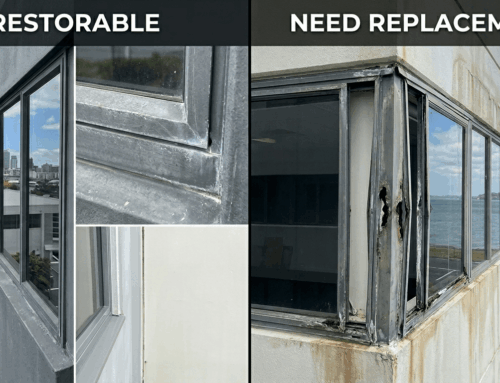
In many cases, yes. The answer depends on the condition of the underlying material and whether the source of moisture can be addressed.
A facade surface may be suitable for repair and refinishing when:
- The substrate remains structurally sound
- Corrosion is limited and treatable
- The moisture-entry point can be corrected
- Failed coating can be removed effectively
- The surrounding finish remains stable
- A compatible wet-spray coating system can be applied
- The repaired area can be finished to an acceptable visual standard
Replacement may be necessary where panels, joinery or metal components are badly corroded, distorted or no longer fit for purpose.
Early assessment can help preserve more options and reduce unnecessary removal of otherwise serviceable materials.
How to Reduce the Risk of Moisture-Related Coating Failure
Property and facility managers can reduce the risk of coating failure through planned inspection and maintenance.
Focus on:
- Checking sealants around windows and facade joints
- Repairing scratches and impact damage promptly
- Cleaning dirt, salt and contamination from exterior surfaces
- Inspecting exposed edges and panel junctions
- Watching for bubbling, staining or peeling
- Keeping drainage paths and weep holes clear
- Recording defects that repeatedly appear in the same location
- Arranging professional assessment before local damage spreads
A small defect is usually easier to investigate and repair than a large area of failed coating.
When Should You Contact a Facade Refinishing Specialist?
Arrange an inspection when you notice:
- New or expanding blisters
- Peeling around windows, joints or panel edges
- Rust or white oxidation
- Water staining after rain
- Repeated failure after earlier touch-ups
- Coating that sounds hollow or feels loose
- Several defects appearing across the same elevation
The goal is not simply to hide the visible damage. It is to identify why the finish has failed, prepare the substrate correctly and apply a repair system suited to the surface and building.
Frequently Asked Questions
Can moisture behind a facade coating dry out by itself?
The moisture may eventually evaporate, but the weakened adhesion, contamination or corrosion can remain. If the coating has blistered or peeled, drying alone will not usually restore the bond.
Does blistering always mean there is a leak?
No. Blistering may also result from contamination, poor preparation or unsuitable application conditions. However, failed seals, joints and facade details should be investigated as possible causes.
Can only the damaged area be repaired?
A localised repair may be possible when the affected area is limited and the surrounding coating remains sound. Broader refinishing may provide a more consistent result when the damage is widespread or the existing colour and gloss have changed.
Deal With Moisture Before the Damage Spreads
Moisture behind a facade coating can turn a small visual defect into a larger remedial problem. Blistering, peeling and corrosion may indicate that the existing finish is no longer protecting the substrate effectively.
Early investigation can help determine whether localised repair, broader wet-spray refinishing or a larger facade refurbishment is the most suitable solution.
WRNZ provides professional coating repair, facade refurbishment and refinishing services throughout Auckland. Its mobile team repairs and refinishes aluminium joinery, steel and architectural panel surfaces that were originally powder coated, using wet-spray coating systems applied on site.
This approach can reduce disruption, limit material waste and help avoid unnecessary replacement where the existing components remain suitable for restoration.
Have you noticed bubbling, peeling or corrosion on your building facade? Contact WRNZ to arrange an assessment before moisture-related coating damage spreads.