How Long Does Powder Coating Really Last in NZ Conditions?
- What Is the Average Lifespan of Powder Coating in NZ?
- Why Coastal Buildings Deteriorate Faster
- Commercial Building Exposure: Why Environment Still Matters
- NZ Case Study: Hamlins Hill Commercial Centre, Penrose
- Early Signs Powder Coating Is Failing
- How to Extend the Life of Powder-Coated Surfaces in NZ
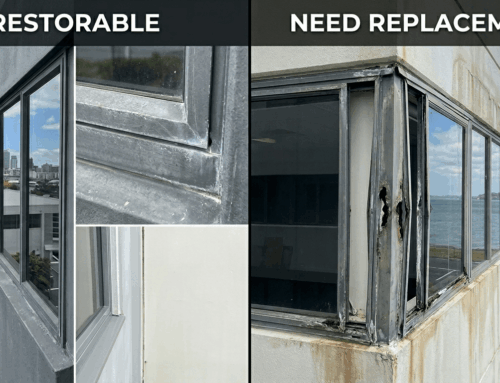
- When Should You Refinish Instead of Replace?
- What This Means for Auckland Property Managers
- Final Thoughts
Powder coating is widely known for its durability – but in New Zealand, lifespan depends heavily on environmental exposure.
A building in coastal Mission Bay will age very differently to one in inland Penrose. Salt, UV intensity, wind and moisture all influence how long aluminium powder-coated surfaces maintain their protective performance.
Understanding these differences helps property managers, developers and building owners plan maintenance properly – before minor degradation becomes costly remediation or full replacement.
While WRNZ does not apply original factory powder coating, we specialise in repairing and refinishing aluminium elements that were previously powder coated, helping restore protection, appearance and service life when the original finish begins to fail.
What Is the Average Lifespan of Powder Coating in NZ?
In typical New Zealand conditions, powder coating lifespan varies significantly depending on location and exposure.
Powder Coating Lifespan by Environment in NZ
| Environment Type | Typical Lifespan | Main Risk Factors | Recommended Inspection Frequency |
|---|---|---|---|
| Inland / Low Exposure | 15–25+ years | UV exposure and general weathering | Every 2–3 years |
| Urban Commercial | 12–20 years | Pollution, UV and moderate moisture | Every 2 years |
| Coastal Residential | 8–15 years | Salt-laden air, moisture retention and UV | Annually |
| High-Salt Waterfront / High-Rise | Under 10–12 years | Continuous salt exposure, wind loading and abrasion | Annual inspection plus routine washing |
These ranges assume correct original specification and proper surface preparation at the time of manufacture.
Key factors influencing lifespan include:
- UV exposure levels
- Salt content in the air
- Wind-driven abrasion
- Moisture retention
- Colour choice (darker colours absorb more heat)
- Ongoing maintenance
New Zealand’s high UV index and extensive coastline mean environmental stress is often underestimated.
Why Coastal Buildings Deteriorate Faster
Coastal exposure is the single biggest lifespan variable.
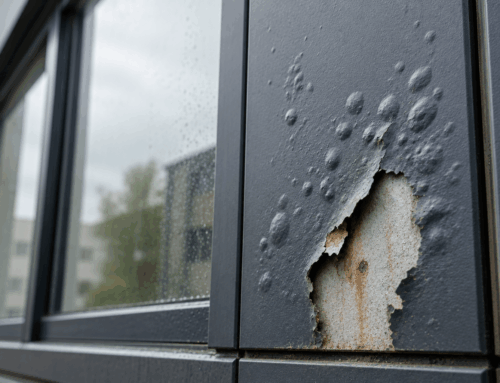
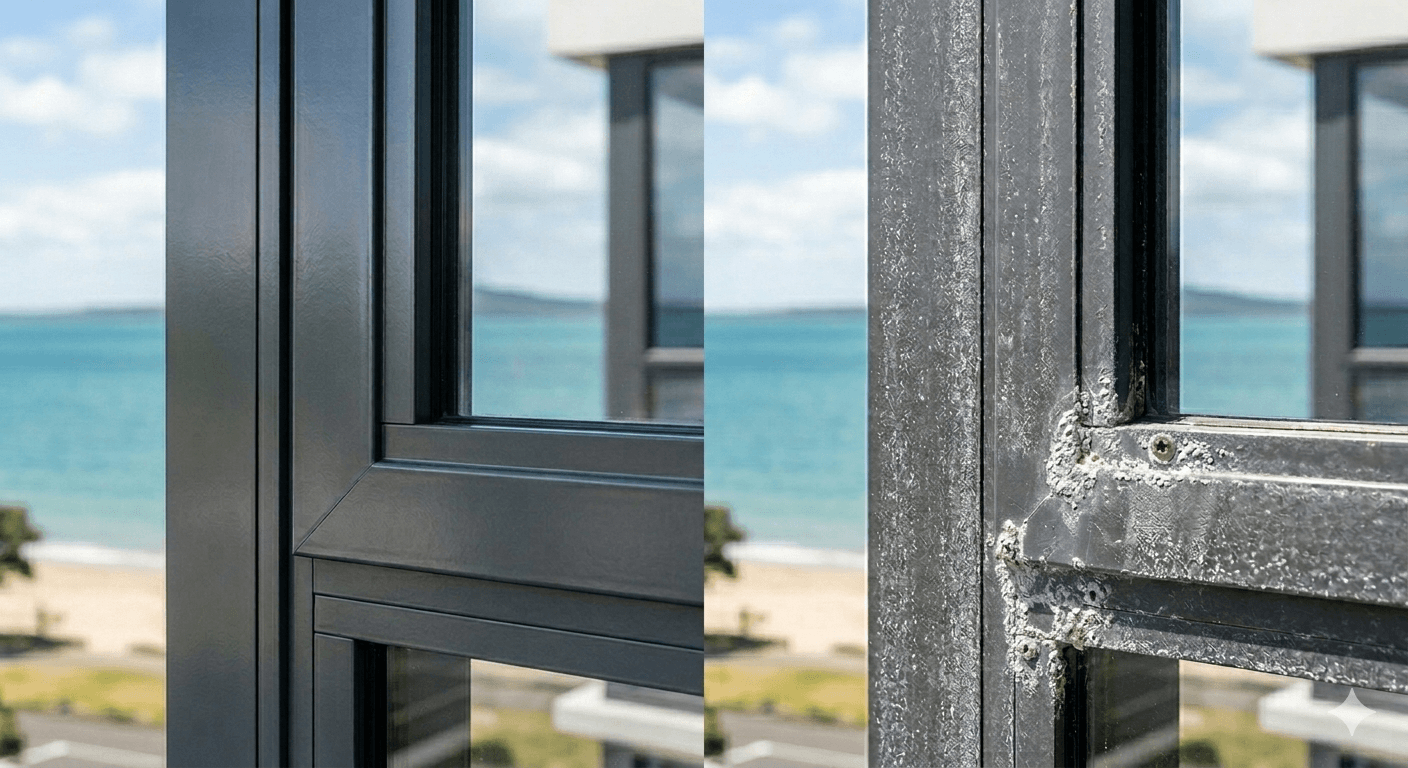
Salt-laden air gradually breaks down coating integrity. Microscopic salt deposits sit on the surface, drawing moisture and accelerating oxidation. Over time, this can lead to:
- Fading
- Chalking (powdery residue)
- Micro-cracking
- Underfilm corrosion
- Loss of gloss
Even well-applied factory coatings age faster near the sea.
Commercial Building Exposure: Why Environment Still Matters
Two buildings finished with similar coating systems can age very differently depending on exposure conditions, maintenance history and façade position.
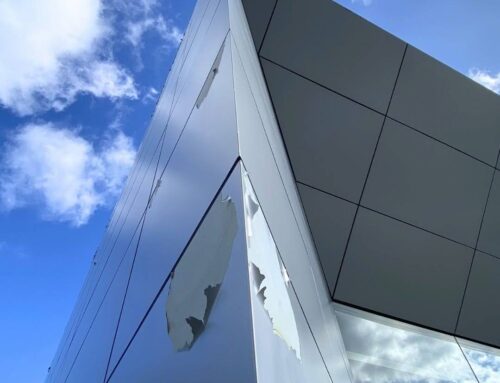
Areas exposed to higher sunlight, retained moisture, air movement and general environmental stress often show earlier signs of:
- fading
- chalking
- loss of gloss
- surface breakdown
- localised oxidation
This is why regular inspection and timely refinishing are essential for extending the life of coated aluminium assets in New Zealand conditions.
NZ Case Study: Hamlins Hill Commercial Centre, Penrose
A recent aluminium Joinery refinishing project at a live commercial site in Penrose shows how this process works in practice.
WRNZ carried out detailed surface preparation, including oxidation and corrosion treatment, followed by full masking of glazing and surrounding elements. A high-performance recoating system was then applied using controlled spray techniques across multiple tenancy units.
| Element | Details |
|---|---|
| Location | Penrose, Auckland |
| Site Type | Live commercial precinct |
| Work Type | Aluminium joinery refinishing |
| Key Preparation | Surface preparation, corrosion treatment and masking |
| Application | High-performance spray coating system |
| Challenges | Active tenants, restricted access and weather conditions |
| Outcome | Uniform finish, improved durability and minimal disruption |
The project required careful coordination to maintain safe access and minimise disruption, while still delivering a consistent, long-lasting finish.
Early Signs Powder Coating Is Failing
Property managers should monitor for early warning signs.
Powder Coating Failure Indicators
| Visible Sign | What It Indicates | Recommended Action |
|---|---|---|
| Chalking | UV degradation of topcoat | Schedule professional inspection |
| Fading / Colour shift | Surface breakdown | Assess coating condition |
| Bubbling / Lifting | Moisture intrusion beneath coating | Immediate professional review |
| Corrosion at joins | Underfilm corrosion | Targeted repair or refinishing |
Addressing these early allows surfaces to be professionally refinished before structural corrosion develops.
How to Extend the Life of Powder-Coated Surfaces in NZ
In coastal Auckland especially, preventative maintenance is essential.
Best practice includes:
- Routine washing to remove salt deposits
- Scheduled façade inspections
- Immediate repair of scratches or impact damage
- Professional assessment before visible corrosion spreads
- Refinishing before full breakdown occurs
Timely refinishing of original powder-coated aluminium is considerably more cost-effective than full joinery or façade replacement.
When Should You Refinish Instead of Replace?
Replacement is usually only required when structural corrosion has progressed beyond surface repair.
Refinishing is viable when:
- The aluminium substrate remains structurally sound
- Failure is surface-level
- Corrosion has not deeply penetrated
WRNZ specialises in restoring previously powder-coated aluminium using advanced wet spray systems designed to deliver long-term protection in NZ conditions.
What This Means for Auckland Property Managers
For commercial property managers and body corporates, understanding exposure risk is key to asset planning.
Coastal properties should:
- Schedule more frequent inspections
- Budget for earlier refinishing cycles
- Act before corrosion spreads
Inland buildings typically allow longer maintenance intervals – but UV and weather exposure still require proactive oversight.
Waiting until visible corrosion becomes severe increases both cost and risk.
Final Thoughts
Powder coating in New Zealand can last decades – but exposure level determines performance.
Coastal environments accelerate deterioration. High-rise wind exposure adds further stress. NZ’s high UV levels shorten lifecycle expectations compared to many overseas markets.
The difference between 8 years and 25 years often comes down to:
- Original specification
- Environmental exposure
- Ongoing maintenance
- Timely refinishing
If your aluminium joinery or façade was originally powder coated and is now showing signs of breakdown, professional refinishing can restore protection and extend asset life without full replacement.