The Impact of UV Radiation on Aluminium Joinery (and How to Protect It Long-Term)
- Why UV Exposure Is Such a Problem for Commercial Buildings
- How UV Radiation Breaks Down Powder-Coated Aluminium Joinery
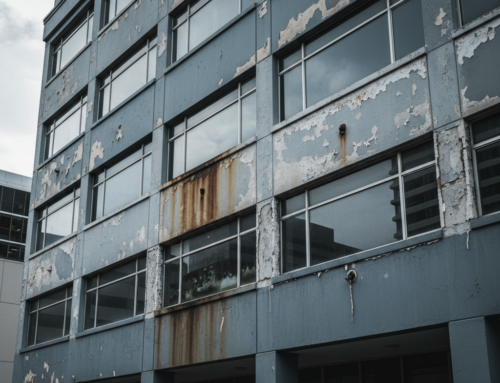
- Visible Signs of UV Damage on Commercial Aluminium Joinery
- Why Replacement Isn’t the Best Option for Commercial Buildings
- How On-Site Wet-Spray Restoration Protects Joinery Long-Term
- Case Example: UV-Damaged ACM and Aluminium Joinery
- Why UV Protection Matters for Asset Managers and Commercial Owners
- How to Protect Aluminium Joinery Long-Term
- WRNZ: Specialists in Commercial Joinery & Façade Restoration
- FAQs
- Related Posts
UV radiation gradually breaks down factory-applied powder coatings on commercial aluminium joinery, causing fading, chalking, surface erosion, and reduced corrosion resistance. On-site wet-spray restoration systems provide a long-term protective solution by renewing the coating, improving UV stability, and extending asset lifespan without removing joinery.
Why UV Exposure Is Such a Problem for Commercial Buildings
Commercial buildings across Auckland and wider New Zealand face intense solar exposure due to long daylight hours, reflective urban environments, and coastal conditions. Aluminium joinery on these properties typically arrives with a factory-applied powder coating – but even high-quality architectural coatings degrade over time under sustained UV stress.
For large commercial assets, this results in visible deterioration, declining aesthetics, compromised protection, and lower building value. Understanding how UV affects coated aluminium helps property managers plan timely and cost-effective maintenance.
How UV Radiation Breaks Down Powder-Coated Aluminium Joinery
UV damage occurs through several chemical and physical mechanisms that weaken the coating and expose the substrate.
1. Photodegradation of the Binder
UV light attacks the resin system in powder-coated surfaces, breaking down the molecular bonds that hold the coating together. As the binder deteriorates:
- the surface becomes chalky
- colour pigments fade
- gloss levels drop significantly
This chalking is one of the earliest and most recognisable signs of UV failure.
2. Pigment Fade and Colour Erosion
Dark and bold colours often fade fastest because they absorb more thermal energy. Commercial buildings with modern deep colours – charcoals, blacks, bronzes – commonly experience uneven fading within a few years of installation.
3. Loss of Protective Film Thickness
Over time, UV exposure erodes the coating layer itself. As the coating thins:
- corrosion protection decreases
- micro-cracks form
- moisture intrusion becomes more likely
This accelerates failure, particularly in coastal environments.
4. Increased Surface Porosity
UV breakdown creates a more porous surface, allowing contaminants and salt to accumulate. This leads to:
- accelerated corrosion at cut edges
- staining around drainage points
- early coating breakdown on exposed elevations
Combined with Auckland’s salt-laden winds, the UV–salt interaction significantly shortens the expected performance life of original coatings.
Visible Signs of UV Damage on Commercial Aluminium Joinery
Facilities managers often notice:
- severe fading or colour shift
- chalky residue transferring to the touch
- patchy or uneven appearance
- rough or matte texture
- early surface corrosion around mitred joints
- coating loss on sun-facing elevations
If ignored, these issues eventually compromise façade performance and can lead to expensive replacement costs.
Why Replacement Isn’t the Best Option for Commercial Buildings
Replacing aluminium joinery is disruptive, costly, and often unnecessary. For commercial buildings, replacement can require:
- scaffold or full access systems
- interior disruption
- removal of glazing
- permits and compliance
- long lead times for new joinery
In most cases, the aluminium substrate remains structurally sound – only the coating has failed. This makes refurbishment the more efficient and environmentally responsible option.
How On-Site Wet-Spray Restoration Protects Joinery Long-Term
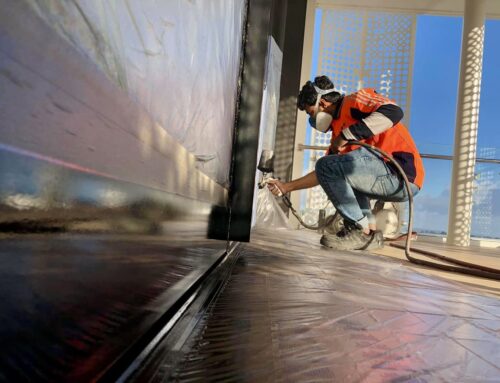
WRNZ restores and refinishes aluminium joinery that was originally powder coated, using high-performance wet-spray architectural coating systems engineered for commercial environments.
1. Full Surface Preparation
We remove oxidisation, chalking, corrosion, and failed coating, preparing a clean, stable surface to ensure adhesion.
2. Application of UV-Stable Coating Systems
WRNZ applies multi-layer wet-spray coatings developed specifically for long-term exterior performance. These coatings:
- resist UV degradation
- maintain colour stability
- prevent future chalking
- offer superior film build and durability
3. Improved Corrosion Resistance
Our coating systems are designed to protect commercial joinery in coastal or high-exposure zones, significantly improving longevity.
4. On-Site Application With No Removal Required
Work is completed in situ, with minimal disruption to tenants or ongoing operations – a major advantage for commercial properties.
5. Extended Lifecycle Performance
Restored joinery typically achieves an additional 10–12 years of performance, depending on exposure and maintenance.
Case Example: UV-Damaged ACM and Aluminium Joinery
On several large Auckland commercial projects, WRNZ has restored weathered ACM panels and aluminium joinery suffering from:
- UV fade
- chalking
- early corrosion
- inconsistent colour across elevations
Wet-spray restoration delivered a uniform architectural finish, improved UV resistance, and avoided the need for full panel or joinery replacement – saving clients hundreds of thousands of dollars.
Why UV Protection Matters for Asset Managers and Commercial Owners
Long-term exposure leads to:
- reduced property value
- poor first impressions
- accelerated maintenance cycles
- increased corrosion risk
- non-compliance with body corporate or lease obligations
Restoration protects the asset, preserves the building envelope, and ensures modern, consistent presentation across all elevations.
How to Protect Aluminium Joinery Long-Term
1. Schedule periodic façade inspections
Early detection prevents large-scale deterioration.
2. Restore fading before the coating fully fails
Timely intervention reduces cost and disruption.
3. Use UV-stable architectural coating systems
Modern wet-spray finishes provide superior long-term stability.
4. Avoid harsh cleaning chemicals
These accelerate coating breakdown.
5. Recoat high-exposure elevations earlier
North- and west-facing façades degrade fastest.
WRNZ: Specialists in Commercial Joinery & Façade Restoration
WRNZ restores and refinishes aluminium joinery, ACM panels, façades, and architectural elements across commercial buildings in Auckland and wider New Zealand. Using high-performance wet-spray systems, we deliver long-lasting colour, uniformity, and protection against UV, salt, and environmental exposure – without removing any joinery.
FAQs
How long will a restored coating last?
- Typically 10–12 years depending on exposure and maintenance.
Can UV-damaged joinery be restored without removing it?
- Yes – WRNZ completes all refinishing on-site with minimal disruption.
Is restoration suitable for large commercial buildings?
- Absolutely. We complete multi-thousand square metre projects across Auckland.
Does restoration improve UV resistance?
- Yes. High-performance wet-spray systems offer superior UV stability compared with aged original coatings.