Signs Your Building Facade Is Reaching End of Service Life
- What “End of Service Life” Means for Commercial Facades
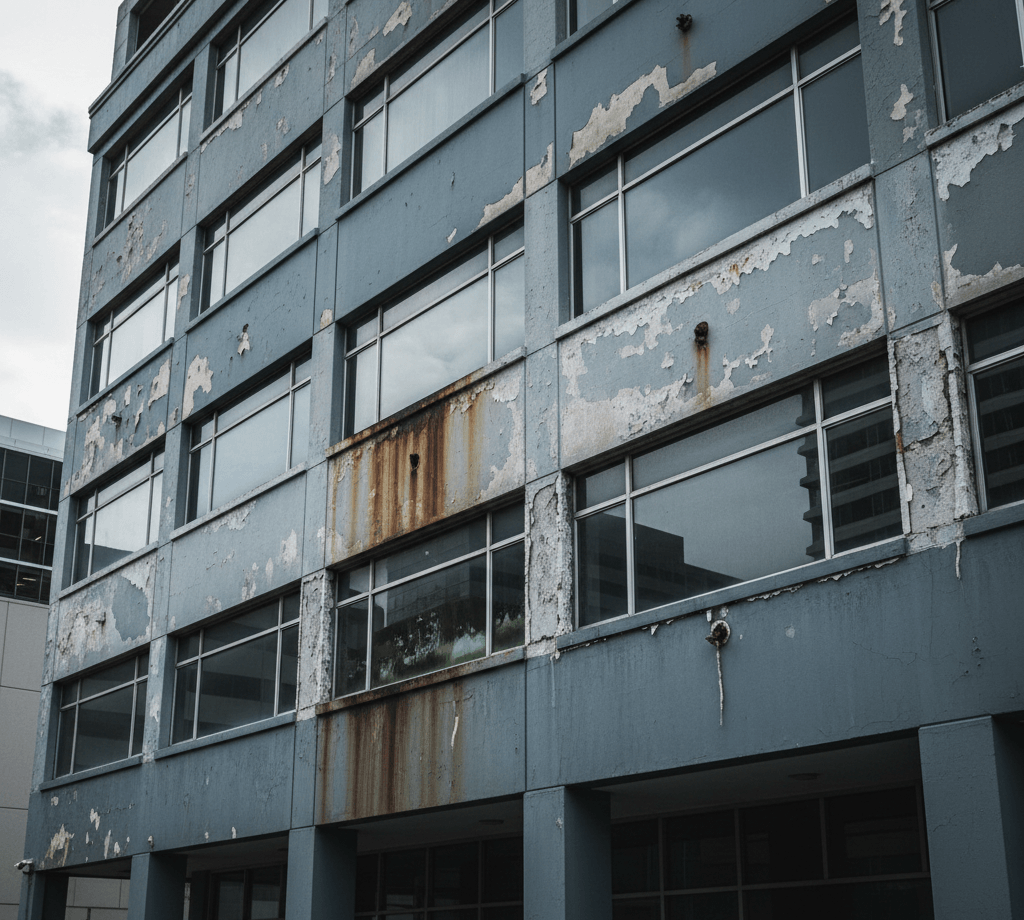
- Visible Surface Degradation and Coating Failure
- Water Ingress and Moisture-Related Damage
- Joint, Sealant, and Fixing Deterioration
- Loss of Protective Performance
- Increased Maintenance and Repair Frequency
- Safety, Compliance, and Liability Concerns
- When Refurbishment Is Still Viable
- When Replacement May Be Required
- Final Thoughts: Acting Before Failure Escalates
Commercial building facades are designed to perform for decades, but even the most robust systems eventually deteriorate. In Auckland’s harsh coastal and high-UV environment, facade materials often reach end of service life sooner than expected. Recognising the early warning signs allows building owners and asset managers to plan proactive refurbishment, avoid escalating repair costs, and maintain compliance, safety, and appearance.
This guide outlines the key indicators that a building facade may be approaching the end of its service life – and what to do before replacement becomes unavoidable.
What “End of Service Life” Means for Commercial Facades
End of service life does not always mean immediate failure. It refers to the point where a facade system no longer performs as originally intended without significant intervention. This can include reduced weather resistance, compromised coatings, or materials that no longer meet modern performance or compliance expectations.
Visible Surface Degradation and Coating Failure
One of the earliest and most obvious indicators is surface deterioration.
Common signs include:
- Fading, chalking, or colour inconsistency
- Peeling, blistering, or flaking coatings
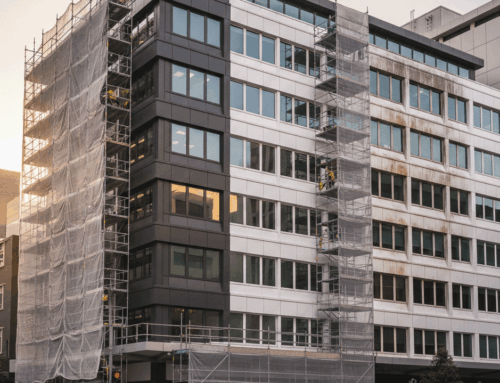
- Oxidation on aluminium surfaces
- Staining caused by trapped moisture or contaminants
These issues often indicate UV breakdown or coating systems that have exceeded their designed lifespan.
Water Ingress and Moisture-Related Damage
Water ingress is a critical warning sign that should never be ignored.
Indicators include:
- Water staining around windows or panels
- Damp internal linings near facade elements
- Corrosion behind panels or joinery
- Mould growth or persistent condensation
Left unaddressed, moisture damage accelerates structural deterioration and increases remediation complexity.
Joint, Sealant, and Fixing Deterioration
Facade systems rely heavily on joints, sealants, and fixings to remain weather-tight and stable.
Warning signs:
- Cracked or brittle sealants
- Shrinkage or separation at joints
- Loose or corroded fixings
- Movement between panels or frames
These failures often precede larger system breakdowns.
Loss of Protective Performance
When coatings and finishes degrade, the underlying materials lose their protective barrier.
This can lead to:
- Accelerated corrosion
- Increased surface abrasion
- Reduced resistance to pollutants and salt exposure
- Shortened lifespan of aluminium and ACP/ACM systems
At this stage, refurbishment may still be effective if addressed early.
Increased Maintenance and Repair Frequency
A clear sign a facade is nearing end of service life is the need for frequent repairs.
If you are:
- Repainting isolated areas repeatedly
- Patching rather than restoring
- Addressing the same defects year after year
…it often indicates the facade system requires a comprehensive remedial solution rather than reactive maintenance.
Safety, Compliance, and Liability Concerns
Facade deterioration can introduce safety risks, particularly on commercial buildings.
Potential issues include:
- Falling panels or loose components
- Non-compliance with Building Warrant of Fitness requirements
- Increased liability exposure for owners and managers
Proactive assessment and refurbishment help mitigate these risks before they escalate.
When Refurbishment Is Still Viable
In many cases, facades nearing end of service life can be professionally refurbished rather than replaced.
Refurbishment may be suitable when:
- Structural elements remain sound
- Degradation is primarily surface or coating-related
- Joints and fixings can be renewed
- A staged, live-site approach is required
This approach significantly reduces cost, disruption, and environmental impact.
When Replacement May Be Required
Full replacement may be necessary if:
- Structural integrity is compromised
- Panel systems no longer meet safety standards
- Water ingress has caused extensive hidden damage
- Previous remedial attempts have failed
A professional assessment is essential to determine the most appropriate pathway.
Final Thoughts: Acting Before Failure Escalates
Identifying the signs of facade service life decline early allows building owners to make informed decisions, control costs, and extend asset longevity. In Auckland’s demanding environment, proactive refurbishment often delivers substantial long-term value compared to deferred action or full replacement.
WRNZ specialises in assessing, refurbishing, and restoring commercial facades, aluminium joinery, and coated surfaces – delivering durable solutions tailored to live commercial environments.