How to Budget for a Commercial Façade Recolour Project in NZ
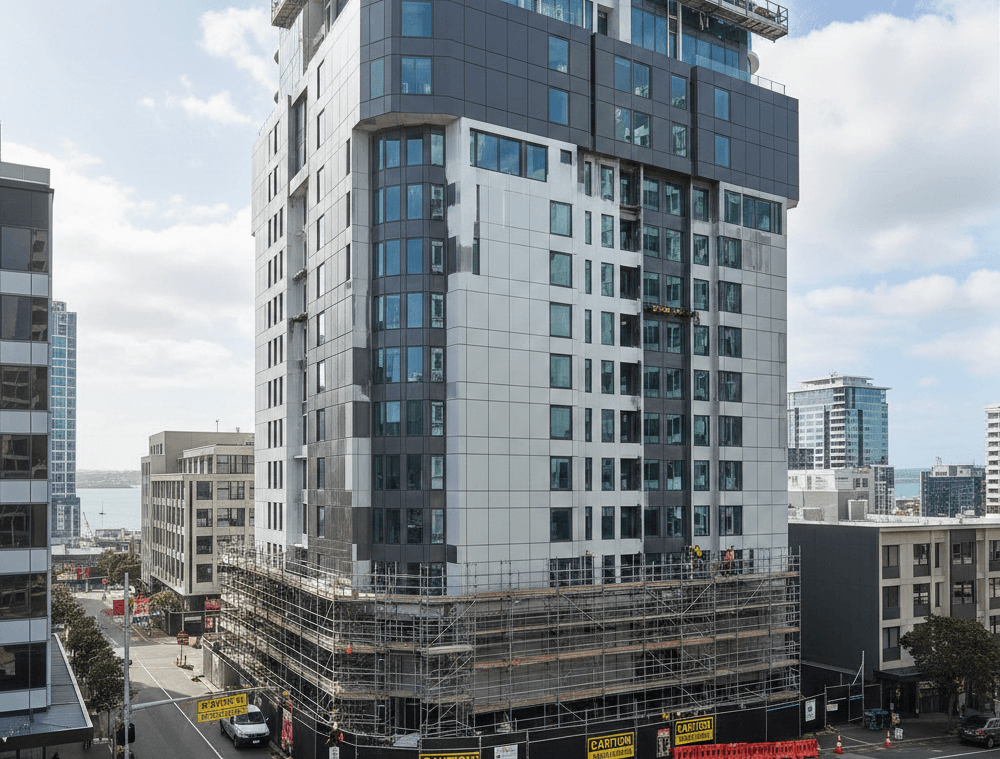
Recolouring a commercial façade is not simply a cosmetic refresh. It is a capital maintenance decision that directly impacts asset value, tenant perception, long-term durability, and compliance.
Yet many property owners, body corporates, and asset managers underestimate what is involved. The result is often scope creep, reactive cost increases, or coating systems that fail well before their intended lifespan.
If you are planning a commercial façade repaint or aluminium restoration project in Auckland or elsewhere in New Zealand, this guide explains how to budget properly and avoid expensive surprises.
Quick Answer: What Does a Commercial Façade Repaint Cost in NZ?
There is no universal per-square-metre rate.
Cost depends on:
- Building height and access method
- Surface condition and corrosion levels
- Preparation requirements
- Coating system specification
- Environmental exposure (coastal, industrial, high-UV)
- Tenant and operational constraints
- Compliance and safety requirements
Accurate budgeting requires a professional site assessment and technical scope — not a rough estimate.
What Actually Impacts the Cost of a Commercial Façade Recolour?
Understanding real cost drivers allows you to plan realistically.
1. Access Complexity
Access is often one of the largest components of a façade refurbishment budget.
Options may include:
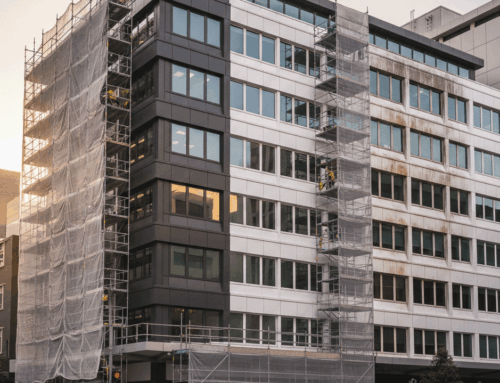
- Full scaffold systems
- Suspended platforms
- Rope access
- Elevated work platforms
High-rise and CBD buildings require significantly more planning and coordination than low-rise structures. Access selection directly affects labour time, safety management, and programme duration.
2. Surface Preparation Requirements
Preparation determines performance.
This may involve:
- Oxidation removal
- Corrosion treatment
- Mechanical abrasion
- Sealant replacement
- Panel repairs
- Flashing remediation
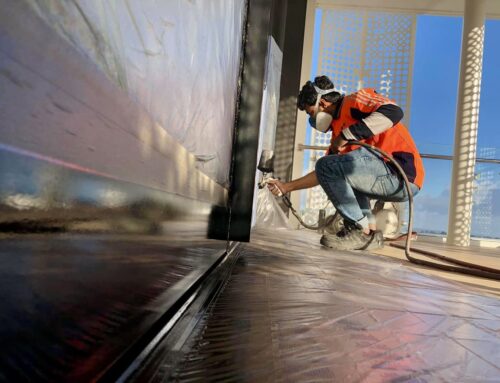
In many commercial projects, preparation takes longer than coating application itself. Underestimating this phase is one of the most common causes of budget escalation.
3. Corrosion Severity
Early chalking and fading are relatively straightforward to address.
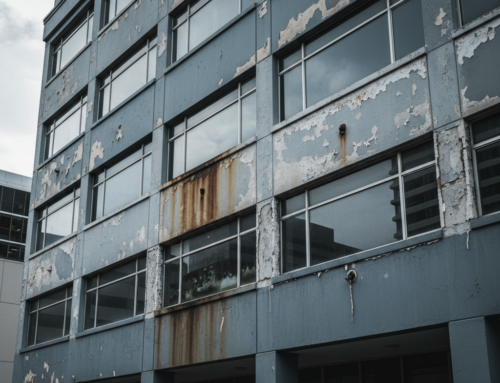
Advanced corrosion, pitting, or coating delamination significantly increases labour and system complexity. Waiting until visible failure appears almost always increases total project cost.
Proactive intervention protects budgets.
4. Coating System Specification
Not all coating systems deliver the same lifespan.
High-performance polyurethane systems and marine-grade specifications cost more initially but provide:
- Superior UV resistance
- Longer colour retention
- Enhanced corrosion protection
- Reduced long-term maintenance
Selecting a system purely on price often leads to premature failure and repeat expenditure within 5–7 years.
5. Environmental Exposure
Auckland’s coastal climate accelerates aluminium degradation.
Buildings exposed to salt air or prevailing weather require higher-specification systems. Budget planning must align with exposure zone classification rather than generic repaint assumptions.
6. Live Commercial Environments
Operational buildings add complexity.
Considerations include:
- Restricted working hours
- Tenant access management
- Noise limitations
- Public safety controls
- Staged programming
These factors influence labour allocation and project duration, and should be incorporated into early budgeting.
The Biggest Budgeting Mistakes Property Owners Make
Avoiding these common errors protects both capital and reputation.
Relying on Generic Per-m² Estimates
Every building differs in age, design, condition, and exposure. Simple square-metre pricing rarely reflects reality.
Underestimating Preparation
Surface preparation is not optional. It is the foundation of coating performance.
Choosing the Lowest Quote
Low pricing often excludes:
- Proper corrosion remediation
- Correct system specification
- Detailed surface assessment
- Long-term warranty backing
Commercial aluminium restoration is a specialist discipline, not a commodity repaint.
Ignoring Lifecycle Cost
A system lasting 15–20 years is often far more cost-effective than one requiring rework in half that time.
Budget decisions should consider total lifecycle value, not just upfront expenditure.
Case Example: High-Rise Budget Planning at The Pacifica, Auckland
At The Pacifica — New Zealand’s tallest residential tower — façade remediation required careful access planning, corrosion assessment, and performance-driven system specification suitable for a high-exposure coastal environment.
Large-scale aluminium joinery and cladding surfaces demanded:
- Detailed surface evaluation
- Structured staging
- High-performance coating systems
- Strict quality control processes
Early assessment and accurate scoping allowed the project to proceed without reactive budget escalation. Aligning specification with environmental exposure ensured long-term durability for a landmark high-rise asset.
Projects of this scale demonstrate why façade budgeting must be structured, technical, and lifecycle-focused.
How to Budget as a Long-Term Asset Strategy
A façade recolour should align with your broader asset management plan.
Think 10–20 Years Ahead
Coordinate works with:
- Capital upgrade schedules
- Warranty expiry timelines
- Future tenancy planning
- Brand repositioning initiatives
Stage Works Strategically
Larger buildings can be staged:
- By elevation
- By tenancy zone
- Across financial years
This spreads capital expenditure while maintaining protection.
Specify for Performance
In coastal New Zealand, marine-grade systems are often essential. Investing correctly upfront reduces disruption and protects long-term value.
When Is the Right Time to Budget for Recolouring?
The ideal time is before visible failure.
Warning signs include:
- Fading or uneven colour
- Surface chalking
- Early corrosion spotting
- Sealant breakdown
- Minor water ingress
Early action significantly reduces remediation scope and overall cost.
Delaying intervention typically increases preparation complexity and total expenditure.
What Contractors Need to Provide an Accurate Proposal
To receive reliable pricing, provide:
- Building elevations or plans
- Height and access information
- Known coating history
- Identified corrosion areas
- Site access constraints
- Preferred timeframes
Professional contractors should conduct a site inspection before finalising scope and cost.
Final Thoughts: Budgeting Smart Prevents Blowouts
Commercial façade recolouring in NZ is a technical investment decision — not a simple repaint.
Accurate budgeting requires:
- Proper assessment
- Realistic scoping
- Performance-based specification
- Lifecycle planning
Handled correctly, façade refurbishment enhances visual appeal, protects aluminium joinery, and extends asset lifespan for decades.
Planning a Commercial Façade Recolour?
If you are budgeting a commercial aluminium façade or joinery restoration project in Auckland or across New Zealand, early consultation ensures clarity and cost control.
A professional assessment provides accurate scoping, system recommendations, and long-term performance planning.
Request a consultation to discuss your building’s condition and capital planning requirements.