Common Fears About Refurbishment (and Why They’re Usually Wrong)
- Fear #1: “Refurbishment will disrupt occupants and tenants”
- Fear #2: “It’s cheaper to replace than refurbish”
- Fear #3: “The finish won’t last”
- Fear #4: “Refurbishment is just cosmetic”
- Fear #5: “The colour won’t match or look right”
- Fear #6: “Refurbishment will uncover more problems”
- Fear #7: “It won’t add real value to the property”
- Fear #8: “It’s hard to find a specialist you can trust”
- Why Refurbishment Is Often the Smarter Choice
- Final Thoughts: Fear Delays, Knowledge Empowers
Refurbishment is often viewed as a necessary evil. Many building owners, body corporates, facility managers and developers know something needs attention, yet delay taking action because of fear – fear of disruption, cost overruns, poor results, or making the wrong decision.
In reality, most of these concerns are based on outdated assumptions or experiences with poorly planned work. When refurbishment is done properly, it can be one of the most cost-effective, low-risk ways to extend the life of a building, protect asset value and improve appearance without full replacement.
Below, we break down the most common fears about refurbishment and explain why, in most cases, they simply don’t hold up – especially when working with experienced remedial and recoating specialists.
Fear #1: “Refurbishment will disrupt occupants and tenants”
This is by far the most common concern, particularly for commercial buildings, apartment complexes, retail spaces and occupied offices.
The reality:
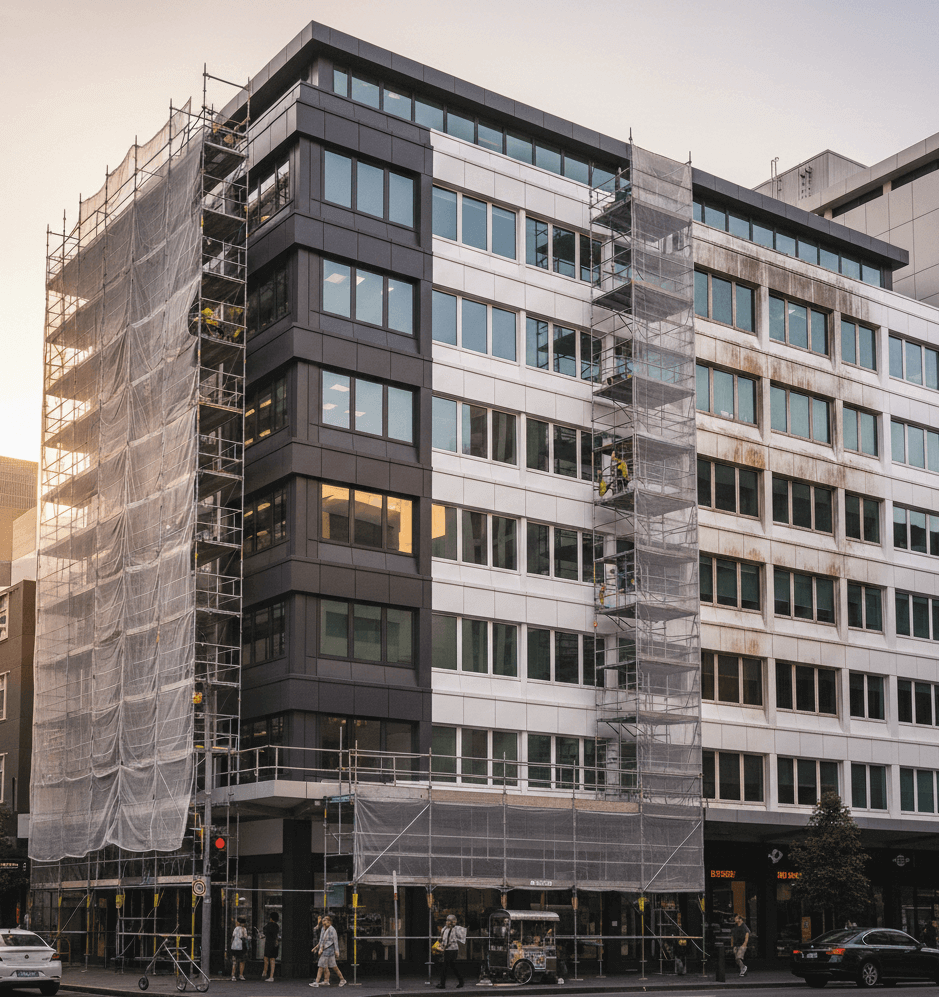
Modern refurbishment techniques are designed to minimise disruption. Many remedial, recoating and refurbishment projects are completed on-site, without removing windows, panels or façade elements. Work can often be staged, scheduled outside peak hours, or carried out elevation by elevation.
Professional refurbishment teams plan around:
- Occupied buildings
- Business operating hours
- Noise and dust control
- Safe access and containment
In many cases, occupants continue using the building throughout the project with minimal inconvenience. Compared to full replacement – which often requires internal strip-outs, scaffold saturation and long downtime – refurbishment is usually the less disruptive option.
Fear #2: “It’s cheaper to replace than refurbish”
Replacement can feel like the safer option. New materials, new warranties, clean slate – right?
The reality:
Replacement is almost always significantly more expensive than refurbishment, particularly when you factor in:
- Removal and disposal costs
- New materials and manufacturing
- Extended labour time
- Scaffolding and access
- Business interruption
Refurbishment focuses on restoring and protecting what already exists. Aluminium joinery, ACP/ACM panels and architectural coatings are often structurally sound but cosmetically or protectively compromised.
When refurbished correctly, these systems can gain many additional years of service life at a fraction of the cost of replacement – often delivering a far stronger return on investment.
Fear #3: “The finish won’t last”
There is a perception that refurbishment is a “temporary fix” – something that looks good initially but deteriorates quickly.
The reality:
Modern coating systems, surface preparation methods and protective finishes are designed specifically for long-term performance in harsh environments – including Auckland’s UV exposure, coastal air and pollution.
High-quality refurbishment includes:
- Thorough surface preparation
- Correct product selection
- Professional application
- Proven coating systems
When these elements are done properly, refurbished surfaces can perform for many years, often comparable to new installations – without the environmental and financial cost of replacement.
Fear #4: “Refurbishment is just cosmetic”
Another common misconception is that refurbishment only improves appearance, not performance.
The reality:
While visual improvement is a major benefit, refurbishment is primarily about protection and longevity.
Professional refurbishment can:
- Halt corrosion and oxidation
- Seal exposed substrates
- Improve weather resistance
- Prevent further degradation
- Extend service life
In many cases, refurbishment addresses issues early, preventing more serious structural or material failures later. It is a proactive maintenance strategy, not just a cosmetic upgrade.
Fear #5: “The colour won’t match or look right”
Concerns about colour matching are common, particularly with partial refurbishments or staged projects.
The reality:
Advanced colour matching and coating systems allow for highly accurate results, even on older surfaces. Experienced teams use:
- Custom colour matching
- Sample testing and approval
- Controlled application techniques
This ensures refurbished areas blend seamlessly with existing finishes or achieve a consistent, refreshed appearance across the entire façade or joinery system.
Fear #6: “Refurbishment will uncover more problems”
Some building owners fear that once refurbishment begins, hidden issues will surface, increasing scope and cost.
The reality:
While assessments may reveal areas needing attention, this is not a negative outcome – it’s valuable information. Early identification allows issues to be addressed before they escalate into structural failures, water ingress or major replacements.
A professional refurbishment provider will:
- Conduct thorough assessments upfront
- Clearly outline scope and risks
- Provide transparent recommendations
This clarity allows informed decision-making, rather than reactive repairs later under pressure.
Fear #7: “It won’t add real value to the property”
Some owners assume refurbishment is a sunk cost rather than a value-adding investment.
The reality:
Well-executed refurbishment can significantly improve:
- Building appearance and street appeal
- Tenant satisfaction and retention
- Asset longevity
- Compliance and safety perception
For commercial and residential buildings alike, refreshed façades, joinery and finishes often translate into higher perceived value, improved leasing appeal and reduced future maintenance costs.
Fear #8: “It’s hard to find a specialist you can trust”
Refurbishment requires expertise. Understandably, many decision-makers worry about choosing the wrong contractor.
The reality:
Specialist refurbishment providers focus exclusively on remedial work, recoating and restoration – not general painting or construction. They understand:
- Architectural materials
- Environmental exposure
- Long-term performance requirements
- Safe access and site management
Working with a specialist team ensures the right systems, processes and standards are applied from the outset – reducing risk and improving outcomes.
Why Refurbishment Is Often the Smarter Choice
When viewed objectively, refurbishment offers several key advantages:
- Lower cost compared to replacement
- Reduced disruption to occupants
- Extended asset life
- Improved aesthetics and protection
- More sustainable use of existing materials
In many cases, refurbishment is not a compromise – it is the most strategic option available.
Final Thoughts: Fear Delays, Knowledge Empowers
Most fears around refurbishment stem from misinformation, outdated experiences or a lack of understanding about modern remedial solutions. When refurbishment is planned properly and delivered by experienced specialists, it is predictable, controlled and highly effective.
If your building, façade or joinery is showing signs of ageing, deterioration or cosmetic decline, refurbishment should not be dismissed out of fear. Instead, it should be explored as a practical, cost-effective and sustainable solution.
Understanding the realities behind these common fears is the first step toward making confident, informed decisions – and protecting your asset for years to come.